Thursday, 12 November 2020

That's The Way It Was Bonus Blog


In September 1970, Ann Moses, then the editor of Tiger Beat magazine, conducted this exclusive interview with Dennis Sanders, director of Elvis - That's The Way It Is, which was then being completed for theatrical release that autumn. During the shooting of the film, he had contacted Ann as one of Elvis' fans and used her definition of being an Elvis fan in the picture. In return, he gave her this interview about filming Elvis, which Ann has kindly allowed me to reproduce it here as part of my two-part piece on the 50th anniversary of the film...

Ann Moses: When you were chosen to do the Elvis film, where did you begin? How much did you know about Elvis Presley?

Denis Sanders: I didn't know that much about Elvis. but I do know a lot about American music. I was not one of the earliest jazz buffs in this country. I have one of the major Jazz collections. Since I was twelve I have been collecting records.

Ann: So, you were really deep into music when Elvis first came out?

Sanders: Oh, I knew about Elvis! I liked him right from the very beginning.

Ann: So, where does one start when you make a movie? Did you look at any of his old films?

Sanders: No, mainly because the film that I'm doing is about Presley as an entertainer, with a quarter of it his show at the International. The other elements that I have chosen to emphasise were the putting together of a show and the fan phenomenon. In a way, its a film by one professional about another professional in another field. So I have no interest, really, in his personal life, I really don't. My interest is solely in Elvis as a performer and as a musician. And as an organiser of his show. And, as a matter of fact. I wouldn't even take an assignment of doing a story of the personal life of a professional like Elvis, because then we'd be arguing about my view versus all kinds of other people's views. I'd be in the same difficult position all biographers are in when it's an authorised biography. But really, in this case, its not a controversial film. Oh, there might be a few areas, like my view of Las Vegas might not be or coincide with everybody else's, but it is my view.

Ann: What about Elvis' contribution to the film? Did you sit down with him and ask him what he thought should be in the film? Or is it strictly your ideas?

Sanders: I told him the elements I was interested in. I told him I wanted to be privy in addition to the show and to the rehearsals and to the process of putting a show together. So would he try to. when I was shooting a rehearsal, organise that rehearsal in such a way that it would be a bit more lucid than if it just completely happened. It would completely happen, but where he felt he needed to make a comment he would, and to me that's not out of context of the film.

Ann: When was your first meeting with Elvis? How did it go?

Sanders: I met with him in his dressing room at MGM, surrounded by hordes of people - his contingent, the Colonel's contingent, my contingent. It was a summit meeting!

Ann: Did you get anything accomplished with so many people there?

Sanders: Well. I sort of got over next to him and while everybody was talking with everybody else, I sort of put my head next to his head and told him what I was going to try to do. And at that point all the other noise ceased and we could talk, and l had to use the time fruitfully!

Ann: Did you get the impression that he was excited about the film? So many of his films have been criticised, one disappointing script after another. There's no script at all for this one. Did he seem excited?

Sanders: Without question! In fact, he thinks it's the first film he'll approve of!

Ann: When you decided to do the film, why did you feel that fans had to be included?

Sanders: Because I feel you don't have an entertainer without an audience. I feel that they are completely interrelated. Some sense of his effect on his audience is as much a part of the drama as the entertainer himself.

Ann: Did you have any idea when you began that the fans would be like the ones you've put on film?

Sanders: No. I didn't know anything about Presley fans.

Ann: Where did you start?

Sanders: With two girl fans and they put me in touch with other girls who had been in fan clubs, or were in fan clubs, and then the whole thing snowballed. Part of the problem on a picure like this is not only to do what I'm saying, but to do it in a short period of time, because I didn't have too much time. Function as a detective, follow the leads, follow where all the lines run as best you can, at least locally. I could neither spend the money or the time to fly all over the world. I also wanted to get a cross-section. I didn't want to have just girls of 18. I also wanted everything from teenyboppers to old ladies. men, different nationalities, and I had to find them. I found you that way. I got in touch with you from a fan that said: "Go see Ann Moses, she's a fan."

Ann: Thanks! Will you be making any statements about the fans, like your opinion of them? Or will it be an objective view?

Sanders: I never work in generalities. The only generality I could say is that generally I don't think generalities are meaningful. The fans are all alive and they're talking. I try to choose a fan who can quickly, in the little time they have before the cameras, convey to the audience a whole sense of who they are. That the tip of the iceberg reveals the whole iceberg, or at least is sensed by the viewer. There is no narration. I don't say anything.

Ann: The early press releases on the film stated that the Elvis film was "going to be a Woodstock on Elvis." Do you think that's an accurate description of your film?

Sanders: The only picture like Woodstock is Woodstock! The only picture like Elvis is Elvis!

Ann: How have you found working with Elvis?

Sanders: Well, if I needed something, I always got it. I never abused it. When I asked, it was never for anything trivial. That's the secret of working with most people anyway. You don't use up your shots on trivial things, but you make it very clear that when you finally ask for something it's for something very important. So the lights are going to come up in the audience and it's going to bother him, but he's going to have to live with it and he did. He knew I had to have it. I didn't bother him for most of the week, once I had the lights up on opening night. And the final night we were shooting I just said I had to. I had to get the audience. I could have said: "I left you alone all week." but I didn't need to say that. And if Elvis was bothered, he'd say: "Kill it, kill the lights." And I'd kill it. That was the deal.

Ann: Do you feel you've caught the "real" Elvis or some portion of the "real" Elvis?

Sanders: Every time the cameras were rolling he knew it. He's very suave about it. He's made too many movies to not know whether the camera is on or off.

Ann: Will we have a glimpse of Elvis when he's not "on"?

Sanders: Yeah. I have a scene backstage opening night. It may be heightened a little by the fact that he knew the cameras were on but still his problems were bigger than my camera at that point. And that's true generally when you're doing a documentary. If you can be there when they've got to cope with something unexpected, then finally they are functioning as they would without cameras. As I say there's probably still some mixture of the sense of theatrics and what was really happening, except that what was really happening was really happening!

Ann: Are there any amusing incidents involving putting Elvis on film?

Sanders: Well, his boys razz him occasionally and at one rehearsal they were really kind of giving him the "business." I thought it was pretty funny. I sort of set it up. I said: "Let's go give him the business and I'll shoot it. "There was one line he was singing in rehearsal that went "I've lost you . . ." and they were razzing him and he started to sing "I've lost you . . ." and one of the guys said something like "You certainly have!"

Ann: When you finally got to the International. What did you want to record on stage?

Sanders: I wanted to get as varied a series of views of the performance as possible - close on his face and full figure, the orchestra itself, the girl singers, everything.

Ann: You had never seen Elvis on stage before. Did your opinion of Elvis change when you saw him perform?

Sanders: I think he's fantastic. I knew he was fantastic the very first time I saw him in rehearsal. I knew where he was. From then on I knew what I wanted to go after. He's got what Brando had at that perfect moment in his career where you couldn't anticipate Brando as an actor. That's what Presley has. The audience can't anticipate him.

Ann: Did anything unexpected happen to make you say to yourself "We have to get that" or hope we got that"?

Sanders: It would have to be "I hope we got that!" I'll tell you about something that got away from me which had to do with Elvis indirectly. I'm so sorry about it. You know when he kisses the ladies during "Love Me Tender." One gal had a hammerlock on him and he sort of pulled free and her wig fell off! It was a great movement but my camera wasn't rolling because they had just run out of film! She suddenly went from a blonde to a brunette! I wish I had that! That's the miss that breaks my heart the most!

Ann: After working with Elvis on this film, Would you like to make a scripted movie with him?

Sanders: I'd love to. It would have to be the right piece of material. Cast right, there's no question about it. I think the mistake with Presley would be to put him into things that are too close to his own personality, But if he could touch the part with his own life experiences, without too much difficulty, then I think he'd be sensational!

Ann: Would you call yourself an Elvis fan?

Sanders: If I were to use your definition, Ann which I filmed for the movie, "It's like falling in love and one day you wake up and you're an Elvis fan" then no, I'm not a fan! To the extent that I'm never a fan, I'd say, yes. I am a fan.

Ann: Would you pay to see his show again?

Sanders: Oh, sure! I'm a professional fan. He moves me as a member of an audience. I admire his great sense of theatrics, and so I'm a fan in that sense. But I don't fall in love with entertainers.

Ann: How much would you say Elvis contributed in the way of creative ideas?

Sanders: I don't know. He said a few things to me, but then things would filter to me through the Parker office. I have no first-hand knowledge. Obviously, I was given access through the joint discussions between Elvis and Col. Parker as to what they considered the proper elements of the film. I'm sure some thought was put into the creative matters. But it is difficult to assess how much creative thinking on time part or the Elvis Presley - Col. Parker group was instigated by Elvis himself. But Elvis does the whole show. He's it. He puts it all together. He's the captain of the ship.

Ann: You said you thought Elvis was going to be proud of his film?

Sanders: I think he will. It's going to be one hell of a picture!  

 
Interview previously published in the 2014 That's The Way It Is Deluxe Edition booklet

Read Ann's fantastic article Yes, I Was In An Elvis Movie here

With thanks to Tony King for the photo of Elvis with Dennis Sanders and the booklet scan 

Wednesday, 11 November 2020

That's The Way It Was


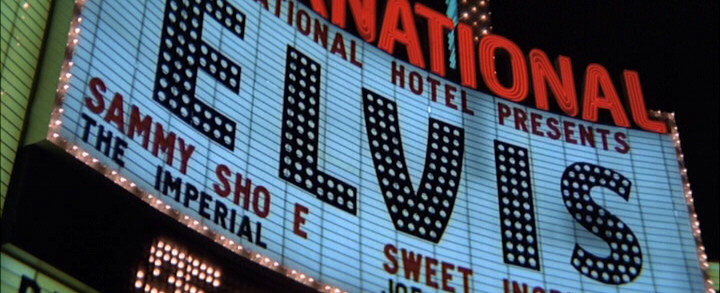
If you're an Elvis fan, it would be hard not to know that this month marks the 50th anniversary of Elvis: That’s the Way It Is, the original theatrical documentary film, directed by Denis Sanders that focused on Elvis' Summer Festival engagement at the International Hotel in Las Vegas in August 1970. It was released in the U.S on November 11, 1970, and in the UK, on April 25, 1971, and was his first non-dramatic film since the beginning of his movie career in 1956. 

Although the majority of the film took place on stage at the International Hotel in Las Vegas, there were several other parts to the film that took place elsewhere, such as the opening credits sequence which was shot at Elvis’ show at the Arizona Veterans Memorial Coliseum in Phoenix on September 9, 1970, which marked the first show of Elvis’ first tour in 13 years. The rest of the film showed Elvis and his band rehearsing at the MGM Studios in Culver City, California, and inside the showroom and convention centre of the International in Las Vegas. Additional footage took cinema audiences to an Elvis Appreciation Society convention in Luxembourg that was filmed on September 5, 1970 where Radio Luxembourg DJs Tony Prince and Peter Aldersley were on hand to lead the festivities. A tandem bicycle owned by Elvis (which I was lucky enough to ride around Heanor in Derbyshire during my fan club branch leader days) was raffled off to a lucky fan in the audience. Additionally, various musicians are seen performing their own versions of Elvis’ songs. The movie also featured interviews with an assortment of “fans,” interviewed and seen throughout the movie in small segments.

As Ann Moses, the editor of Tiger Beat magazine observed in her website article, Yes, I Was In An Elvis Movie, there was the nerdy guy who calls Elvis “The Willie Mayes of entertainment,” and tells Denis “If I don’t like your film I’m going to write you a dirty little letter.” There’s the church lady who tells us that being an Elvis fan is “more than just following his music, real Elvis fans devote part of their lives to him.” and then there's the 50ish grey haired woman and her 80ish white haired mother, who says she likes Elvis, “because he’s a religious boy and he respects his parents.” And the daughter tells us, “He puts so much into a show. Mother likes lots of action. She doesn’t like it when they shoot him from the waist up. She likes to see him move and I admit I do too. He sets my Phi Beta Kappa key a janglin’.” 


And of course, there's the interview with Ann who told us, “It’s so hard to describe what an Elvis fan is. It’s like a phenomenon like falling in love. You can’t describe how it happens, it’s just you’re in love and you know it, and it’s the same with being an Elvis fan. I always go to every opening. I cover them for the New Musical Express in England, but even if I didn’t write for the paper, l know I’d be there. I just couldn’t miss it.”

The movie was recut in 2001 and released as a new special edition version with remastered picture and sound in March of that year, for which I attended the premiere at the Warner West End multiplex in Leicester Square. The new version eliminated much of the documentary material and non-Elvis content to make room for additional performances of Elvis rehearsing and in concert. Oddly enough, the new edition ran 12 minutes shorter than the original, so there seems no valid reason to cut out and omit the interviews or some of the originally included songs, including most notably, the film's biggest hit, the concert performance of I Just Can't Help Believin', even though the new version still retained footage of Elvis being concerned about remembering the lyrics and asking them to be placed on a stool on stage.

It would have been much better if the special edition had left the original version intact with new additional unseen footage added, and been reworked as an "Extended Cut" version for DVD and Blu ray instead of theatrical. Obviously the perfect version would have been a "Director's Cut" but as Dennis Sanders passed away in 1987, that wasn't possible.

Personally I prefer the original 1970 version from a nostalgic point of view and although many fans wouldn't agree, l think it has a better vibe as that was how it was released and cut for theatrical release, and is long overdue for a remastered 4K version!  Yes there are some cringe worthy moments and scenes but feel the continuity, pacing and editing is better and despite the cringe moments, it has a better feel to it! And above all that is how we all remember it! When ever I watch That's The Way It Is at home, I always go for the 1970 version because of it's time piece value, its more of the period and  has in my opinion, a better feel and vibe to it! Above all else it gives us an idea of what it must have been like to see Elvis in person in 1970!

Although the one day cinema presentation of the film in August this year was a #1 box office hit in the UK, l still feel it should have been the original 1970 version that was shown rather than the 2001 re-edited special edition! If the one day presentation was to celebrate the 50th anniversary of the movie, then surely it should have been the original, not the recut version.

Postscript


For those interested to know what happened to Elvis' tandem bicycle, pictured above, it was purchased by Ian Baily in 1974 from the second owner, and according to Ian, it was in a sorry state (wheels rusty, spokes missing). Ian had it for 20 years where it was housed at the Heanor Record Centre in Derby, but in the end decided to give it to his son Scott who was setting himself up in business. But before that, after Ian had it refurbished at a great cost to restore it to its original condition when Elvis owned it to ride around movie lots during his Hollywood years, he decided to put it up for auction in Las Vegas with Bothams after he offered it to Graceland, who offered him peanuts for it. It now belongs to a collector in Texas.


Special thanks to Tony King for the header photo, adapted from the 
original dust jacket of the 1971 Jerry Hopkins biography

Wednesday, 14 October 2020

Cliff Richard, 80 Today! A Guest Blog

As most Cliff Richard fans will know, today marks his 80th birthday, and to celebrate this milestone, there is a new Cliff book released today, but this one is unlike any other Cliff book before it, so I invited one of the book's team, Vic Rust, to share the story of how the creation and making of the Thank You For A Lifetime birthday and charity book came about, and reveal the story behind the evolution of the project, how it progressed and evolved from an idea into a fabulous looking book, especially as I had been invited to write the forward for it, which l have included at the end of this blog. Below is what Vic told me and will no doubt enthrall every Cliff fan, reader and contributor of this truly amazing book!

Vic's Story

Sitting here, holding my copy of the Thank You for a Lifetime charity book a week before Sir Cliff Richard’s 80th birthday, it seems incredible how much effort and energy has been expended in the last sixteen months to make this beautiful book happen.


Terrie Hope, a regular contributor on the internet radio station Cliff Richard Radio, had been in contact with me as she regularly used my book The Cliff Richard Recording Catalogue, to assist with compiling her show, and I had contributed a Cliff-based quiz for her to use on air. 

We had been talking about the Diamond project, which had raised a lot of money for Cliff’s charities by creating a CD of a song (Diamond) based on lyrical submissions from fans. It was she who raised the interesting prospect of creating a book to mark Sir Cliff’s 80th birthday on 14 October 2020, featuring contributions from fans.

I was as keen as Terrie was, if we were going to go ahead with it, to make this a great book, and I set to work on designing a process to manage obtaining all the contributions from fans and getting them into book form. It was clear from the outset that we had something potentially wonderful and extraordinary on our hands.

From the beginning, I was eager for the contributions to mean something and to weed out the inevitable fantasies and offers of marriage. One of our clear priorities was to ensure that all submissions should be focused on how Cliff had inspired them – through his performances, his music, his talent and his faith.

Why did it need to be so complex? That part was simple. We were inviting contributors to donate £5 to put 250-word (max.) memory into the book. But each contribution needed to be vetted to ensure that they were legible and didn’t malign anyone, and specifically Cliff. In addition, we were allowing pictures to be included, which created extra work in tracking down and verifying copyright for their use (it was here that we quickly realized that a lot of the photos coming in were taken by Birch Photography at Cliff’s various wine-signings in Portugal, and we were so grateful to Dan Birch for allowing us blanket use of those photographs).

Terrie's Thank You For A Lifetime production office, where she multitasked on three screens

The project was still evolving. I had the idea of contacting a few celebrities for a contribution to the book, drawing up a possible list, which including the likes of Garth Hewitt, Chris Eaton, the Shadows and many more. I was also keen to get Nigel Goodall involved as he was co-curator of Cliff’s recordings for almost 20 years, to write the foreword. We started getting the responses in from fans and celebrities and it became evident very quickly that we were being overwhelmed by all the work that needed to be done. Terrie was on her own with managing the welter of emails coming in asking questions, making charity payments, providing photos and textual submissions and so on, while I was working at formatting the text and checking the quality of each of the photographs.

In came help from Jane Pinder, who primarily managed the promotional efforts on Facebook, proofread the sections of the book I had formatted, and helped with the huge backlog of emails. She also took up the challenge of contacting celebrities and came up with a magnificent list of them, which were very quickly added to the book, lifting an already brilliant project further.

Then another stroke of fortune came to the project: Mish Kloboucnik, who had provided the famous “Cliff leaping” photo for much of Cliff’s 75th birthday publicity, generously offered us a brilliant selection of photos. The inclusion on the front and back cover as well as montage sections within the book elevated the project even further.

The cycles of submission, verification, proofreading, managing communication continued until the beginning of August 2020, when we closed the doors. Now I had to produce the book (reining in the talents of my wife, Jane, to help with the cover)! To receive the draft copy of a book is always a thrill and both Terrie and Jane loved the result, with only a handful of tweaks needed.

At this time, as we raised the curtain to take pre-orders from those who had contributed, the tsunami of emails came in again. We needed more help and were very lucky to exploit the many skills of Trina Harris, who quietly and diligently crested the huge wave of emails and gave great assistance in the management of the orders, particularly as Jane initiated our plan for promotion around the various Facebook pages.

Now, with the book completed, I am happy to say that our efforts have been more than rewarded by the wonderful comments from those who have seen at least part of the book. But, when Terrie approached me about this project all those months ago, we agreed that we wanted to raise as much as possible for The Sir Cliff Richard Charitable Trust: That has been more than granted. At the time of writing this blog, we have raised over £10,000 and that figure is rising by the day.

In some ways, it’s sad to see this project completed (in others – neglected housework, lack of sleep, square eyes staring at multiple screens, etc. – it’s a relief!). It really has been a team effort to get this extraordinary and beautiful book out. But, without the heartfelt contributions from fans and the involvement of people with whom Cliff has worked, the book would be a considerably lesser beast than it is.

My Foreword

I wasn't old enough to remember Cliff Richard at the start, when he was the new British singing sensation of the late 50s. In fact it wasn't until the early 1960s that my sister got a record player. Like so many others of my age, l was primarily exposed to Cliff's early material, songs like The Young Ones, Do You Wanna Dance, Summer Holiday, and the one that really caught my attention - We Say Yeah. To most teenagers, music was very much a question of choice! And in my day the choice was simple. Cliff Richard or Elvis Presley.

But that all changed very quickly - soon the choice was the Beatles versus the Rolling Stones - and over the next few years Cliff and Elvis faded into the background leaving the most die-hard fans to admit that they still bought Cliff and Elvis records. And even though l wasn't one of those diehards l continued to collect Elvis records, while my sister collected Cliff - a treasury of wonderful and exciting music for both of us! Soon l had become fascinated not just with the records, but with the movies too! But never in my wildest dreams, did l expect to become part of that magical world by writing about Cliff's recording sessions or becoming one of the curators and reissue producers of his EMI catalogue from 1996 to 2018, and never did l expect to meet or interview him on so many occasions, observe him at work in the studio, trawl though hundreds of tape boxes at Abbey Road's tape library or discover a wealth of unreleased material that would now be made available for the first time!  I still find it hard to believe that when l watched Cliff on the big screen in Summer Holiday at my local picturehouse, or listened to the soundtrack album my sister gave me for my 13th birthday that 40 years later l would be working on a special edition of that very same album which would now include never before released alternate versions of the same songs that had enthralled me and so many others during the early months of 1963. It wasn't something l ever expected to play a role in! Neither as a teenager could l have foreseen that l would be asked to write a foreword for a book of birthday tributes from fans, musicians, and personal friends for the 80th birthday of the boy, who in 1958, we were told by Jack Good, was going to rock the world!


Postscript


Since the publication of the book, Terrie, Vic, Jane and Trina (the editorial team), received a thank you letter from Cliff's Secretary and Charitable Trust Trustee, Tania Hogan, at CRO about the money raised so far from sales of the book. It read: "Thank you all as the editorial team, for your sterling work in producing the fabulous book of messages to Sir Cliff for his 80th Birthday, together with the associated fundraising from all the fans. I banked the latest £10,600 cheques last week, and previously 3 cheques totalling £218 from you, so the current total on this project stands st £10,828 for The Sir Cliff Richard Charitable Trust. A fabulous sum of money, for which Sir Cliff and the Trustees are incredibly grateful. These funds will enable the Trust to support a number of worthy charities who appeal for funds - in such a difficult time for all charities. Thank you is not enough really - but rest assured every penny of these funds raised will be well used to help others. Please do pass on our grateful thanks, and best wishes to everyone concerned in the fabulous book - it's certainly one to treasure."

Thursday, 25 June 2020

The Story Behind Elvis' 18th #1


When l was asked by BMG in early 2002 to provide a track and discography history for Elvis' recording of A Little Less Conversation, I was surprised that they were asking me and not their Elvis catalogue producers and curators, Ernst Jorgensen and Roger Semon. What they really wanted to know was where the alternate vocal version featured in the Ocean's Eleven movie had come from. Even more surprising was that they were planning to release it as a new single. It was surprising because the original track had been a mediocre movie song that was released without much attention being paid to it! Of course that was before it had been remixed by JXL as a dance mix, had been sent out as a 12-inch advance promo to clubs for DJs to test club goers reaction to it and got picked up by Nike for their inescapable FIFA Word Cup advertising campaign, so I told them what I knew, and had been asked to research!

What I came up with was this ... the original single version was released in November 1968 with Almost In Love on the B-side. In the US, the single had been released two months earlier with both sides reaching the Top 100 at #69 and #95 respectively. In the UK, without any official cinema release of Elvis’ Live A Little, Love A Little, in which both songs were featured, the single failed to reach the chart at all.

Recorded during the MGM soundtrack sessions at Western Recorders in Los Angeles on 7 March 1968, and with no soundtrack album to accompany the movie, the song was not issued on LP until November 1970, as one of ten tracks on the Almost In Love budget album.

A new vocal version using the original film backing track was taped on 24 June 1968, again at Western Recorders, during the studio recordings for the Elvis NBC-TV Special. With various portions of the show abandoned once other segments had been decided upon, A Little Less Conversation was cut from both the final production of the television show and simultaneous soundtrack album. It did not surface until 1998 on Memories: The 68 Comeback Special. Another previously unreleased performance, found on an acetate (a disc cut for evaluation purposes only) turned up three years later on the movie soundtrack for the 2001 remake of Frank Sinatra’s 1960 Ocean’s Eleven starring George Clooney.

The original 1968 single version was re-mastered for release on Command Performances: The Essential 60’s Masters II in 1995, and in the same year, with the longer 1970 album version, on the Doubles Features set for Live A Little, Love A Little, The Trouble With Girls, Charro! and Change of Habit. The vocal track used on the JXL remix and in the World Cup 2002 Nike commercial was the one featured on the Ocean’s Eleven soundtrack, and whether from single, film or television tapings, only ever existed on an acetate.

The Elvis Vs JXL remix version was released on 25 June 2002, and debuted as a rather surprising #1 in the UK, preventing Kylie Minogue's latest single Love At First Sight, her third from her globally successful Fever album, reaching the top spot. The Elvis remix marked the first time an artist (namely Junkie XL, aka Tom Holkenborg) outside the Presley organisation has been allowed to remix an Elvis song. According to the Official Chart Company, it sold a staggering 243,000 copies, and gave Elvis his 18th UK Number One single logging four weeks at the top, and went on to be 2002's fifth best selling single with 634,000 copies sold that year.

Postscript


According to Piers Beagley of the Elvis Information Network, some years after the track history and research I supplied to BMG in 2002, and the remix had been a #1 hit, and featured as a bonus track on the 30 #1 Hits album that October, Ernst Jorgensen changed his mind about the NBC acetate, and has since said that it was in fact take 2 from the Live A Little, Love A Little sessions, which was the same version used in the Clooney film. Originally, the acetate was found among the NBC demos, but it was in fact for Elvis to listen to, and was not actually a new vocal take. What fooled Ernst and others at the time (apparently) was that the acetate had a fabulous thumping audio mix compared to the original session tapes, so they presumed it had to be an alternate version as it sounded so different.

With thanks to Tony King for the scan of the original 1968 picture sleeve

Saturday, 6 June 2020

Elvis' Most Historic Live Audience Recording


It is the early part of 1977 and I am standing outside a small independent record store in Shoreditch staring at an Elvis album displayed in the window that I had not seen before! That album was a 2 record set bootleg that has since been tagged as Elvis' most historic live audience recording that was simply light years ahead of anything that had been released during his lifetime! Even the sleeve notes were light years ahead of anything that RCA had given the Elvis fan! It was obvious that this was no ordinary live album! It was an attention grabber, the likes of which we had never seen before! My thoughts now, as back then, were how come, it took a bootleg record label to deliver the kind of live album, both in sound and packaging, that Elvis fans at that time, had craved to see released for years!

The album was recorded on two C120 compact cassettes by superfan, police officer John Herman, who placed two tape decks on top of the stage, which explained the high quality audio, even though John’s original plan was to plug his tape recorders into the the sound system, with the help of sound engineer Bill Porter, to create a soundboard recording, that didn't work out as planned. Looking at the album jacket today, it's still a stunning piece of cover art that at the time put RCA firmly in the shade. Not only did it feature 16 great photos shot by John, and Bob Heiss, from the actual show, but also included the kind of insightful sleeve note that we never had on any officially released live product. Printed on a bright blue background, the overall design was exceptional, and considering the fact that it was an audience recording, the sound quality was equally out of this world for its time. It’s no wonder that it sold out so quickly, and resulted in multiple reprints over the years since its original 1977 release. If there were any awards for bootleg records, this one would have walked away with every one for sound, design and marketing, and due to its popularity would have, by today's standards, easily earned itself a certified gold or platinum status.


The whole thing was perfectly summed up in the sleeve note by J.J.R... Whatever it is that Elvis Presley has when it comes to generating excitement in a live audience, he has always had. Early on it was evident. Pandemonium. Chaos. If you would ask HIM what it is, he would probably say, “Beats me Jack.” But the fact remains almost from the first time he stepped on stage, audiences have been caught in the magnetism, charisma, (or whatever the hell you want to call it) of the man.

The screams, the yells, the shouts. It had never happened before. True, Sinatra had generated an incredible excitement, but they swooned for “Frankie boy.” The screams and shouts that accompanied Elvis were in keeping with the unleashing of the raw power being generated by Tupelo, Mississippi’s favourite son.

Then for a long time the screams and shouts were silenced.

I mean who can scream to HE’S YOUR UNCLE NOT YOUR DAD and the rest that those of us who dug Presley were forced to sit through in the movie houses?

And just then, when most of the civilized world had counted Elvis Aron down and out, he unleashed the raw power once again, and about ten years ago the screams and shouts, this time accomapnied by swoons and shrieks, made a comeback. The man was working ‘live’ again. And when you refer to a Presley concert as ‘live’ you can bet your Sun 78’s that ‘live’ takes on a whole new meaning.

A Presley audience is special. Watching them is part of the show. But then watching them is impossible, because if you’re watching them it means you’re in the same room. And if you’re in the same room, it means you’re one of them. It’s that kind of vicious circle.

Which brings us to this record.


Why another live recording? Well one of the disadvantages of Elvis’ re-emergence as a live artist was the lack of originality on the part of his record company and management people with regard to record releases. The Presley-record buying public was a victim of over-kill. One live recording after another was released, and the Elvis fans like dutiful collectors they are, bought one package after another. Until finally it’s to the point, where even the die-hard collectors are thumbing their collective noses at the little pooch listening attentively to the gramaphone. We’ve had it. I mean how many versions of CAN’T HELP FALLING IN LOVE does one need before the message comes across?

Alright, now granted CAN’T HELP FALLING IN LOVE is included in this recording, as are many of the other songs Elvis continually does in his act night after night. That can’t be helped. After all, it’s what the people pay to see. But here for the the first time on record, is the excitement of an Elvis Presley concert in its totality.

December 31, 1976. The hands of the clock nearly straight up approaching midnight and a new year. Within these album jackets are the moments as they happened. Nothing deleted. Not just the high’s but also the quieter moments – which in their strange ways are as exciting as the fever-pitch moments. A man being called to the stage by Elvis, and then presenting Presley with an appropriate Bicentennial gift of a “Liberty Bell”. (The man is Jim Curtin, a long time Presley afficiando from Derby, Pa.) Elvis introducing his “daddy” and little Lisa. And then there’s his introduction of the song FAIRYTALE, which he describes as “the story of my life.” Most astonishing is his compliance with spontaeneous requests from the audience.

He was having a good time, and wanted everyone to be happy. It was like the man was entertaining the 16,409 people in the Pittsburgh Civic Arena that night in his own living room. You know how you get when you have a bunch of friends over on New Year’s Eve to celebrate – their wishes are your commands. You wait on them hand and foot. You mingle with them, talk with them, and by the time everyone splits half-gassed with lamp shades on their heads, everyone had a hell of a good time. And you as the host are the one responsible.

Well, that’s the feeling one gets after listening to this recording. It was like, everyone was invited to Graceland, and Elvis threw this unbelievable bash, and a good time was had by all.

Not that the evening didn’t have it’s musical highlights. It assuredly did. Some of the songs are here for the first time on a live recording. BIG BOSS MAN, FAIRYTALE, HURT, RECONSIDER BABY, the beautiful EARLY MORNING RAIN, LOVE LETTERS, two surprise ‘oldies’ LITTLE SISTER and IT’S NOW OR NEVER. And the whole evening is capped off by Elvis sitting at the piano and performing RAGS TO RICHES and the haunting UNCHAINED MELODY.

No shortcuts here. Ninety minutes of non-stop Presley. No edits. No hype, No canned connection. Back to the days of the one-night stands down South. Audiences saw him then for the first time. Not quite sure what he made happen, but enjoying whatever it was.

If throughout the rest of the year there was a Presley drought, listening to the man belt them out as ‘76 gave way to ‘77, one could stop, ponder, and say “it was a very good year!” 


With thanks to Tony King for the sleeve and label scans

Thursday, 23 April 2020

42 Years On: My First Elvis Monthly Review


Back in 1978, when I was the Sussex Branch Leader of the Official Elvis Presley Fan Club of Great Britain, long before I was a graphic designer or a writer, even though I was producing fan club newsletters with various articles, news and reviews, when RCA Records in London sent me a review copy of Elvis' latest gospel compilation album, I had the idea to write a review for Elvis Monthly, which was published in the August 1978 edition, and to this day remains my first published work in a magazine. What follows is the result...  

It is not the easiest of tasks to find something new to say about an album of reissued tracks, for this is the case with the Elvis LP, He Walks Beside Me (RCA 12772). Instead of repeating what has already been said regarding the material, I have decided to give a factual account of the songs; including dates of the recording sessions, original releases and other relevant information, together with a look at the sleeve design, which seems to have had a little more thought put into its presentation than usual.

So let’s start with the sleeve. The front has a really good close-up shot from the Aloha TV Special, one which I don’t think has been used before; to the right of the photo, Elvis’s name is stylishly printed in a white ornate style of flourished lettering that looks highly impressive against the black coloured background. Immediately below is the album’s full title He Walks Beside Me – Favourite Songs of Faith And Inspiration printed in smaller type. The reverse side of the sleeve has a centre panel mounted on a black background. At the top of this panel a photograph of a church spire is displayed. Immediately below are the song titles together with a few credits, such as “Reissue produced by Joan Deary” and “All the material previously released except The Impossible Dream and If I Can Dream” – and that is basically it. A sleeve that in my opinion uses some imagination, and is both eye-catching and mood-setting for an album of Gospel selections, which are as follows :-

Side One
HE IS MY EVERYTHING Recorded 9 June, 1971, RCA Nashville. Originally issued in 1972 on He Touched Me LP (LSP4690).
MIRACLE OF THE ROSARY Recorded 15 May, 1971, RCA Nashville. Originally issued in 1972 on Elvis Now LP (LSP 4671).
WHERE DID THEY GO LORD Recorded 22 September, 1970, RCA Nashville. Originally issued in 1971 as the flip side to the Rags To Riches single (RCA 2084). UK chart position: No.9. Never before issued as an LP.
SOMEBODY BIGGER THAN YOU OR I Recorded 27 May, 1966, RCA Nashville. Originally issued in 1967 on How Great Thou Art LP (LPM/LSP 3758). The session that produced this track and the album was the first in 28 months that Elvis recorded anything else than movie soundtracks. It also marked the debut of producer Felton Jarvis. The album received a Grammy award for Best Sacred Performance.
AN EVENING PRAYER Recorded 18 May 1971, RCA Nashville. Originally issued in 1972 on He Touched Me LP (LSP4690).
THE IMPOSSIBLE DREAM Recorded 16 February 1972, Hilton Hotel, Las Vegas (live recording for RCA). Previously unreleased. Already released version appears on the Madison Square Garden LP, recorded 10 June, 1972. Difference between the two takes is not highly noticeable.

Side Two
IF I CAN DREAM Recorded 29 June, 1968, NBC Studios, Burbank. The second of the so-called new tracks which is a slightly different version to the one previously released as a single in 1969, in that the back-up vocals are missing, and that is about the only noticeable difference.
PADRE Recorded 15 May, 1971, RCA Nashville. Originally issued in 1973 0n Elvis LP (APL1 0283).
KNOWN ONLY TO HIM Recorded 31 October 1960, RCA Nashville. Originally issued in 1961 on His Hand In Mine LP (LPM/LSP 2328), also issued as a single in the US during 1966, coupled with Joshua Fit The Battle.
WHO AM I Recorded 22 February, 1969, American Sound Studios, Memphis. Originally issued in 1971 on You’lll Never Walk Alone LP (CAL 2472).
HOW GREAT THOU ART Recorded 25 May, 1966, RCA Nashville. Originally issued in 1967 on award-winning album of the same name. Also issued in 1967 on A Legendary Performer Volume 2 LP (CPL1 1349), also as a single (US only) in 1969, coupled with His Hand In Mine. A live version appears on the album: Elvis As Recorded Live On Stage in Memphis (CPL1/APD1 0606), released in 1974.

Thursday, 20 February 2020

Cilla - The Lost Sleeve Notes


Back in the mid 60s, two years into my teenage years, I was like most other teenagers of that era, and spending most of my pocket money on records. With the release of Cilla Black's previously unreleased single last week, recorded a decade later when rock music came of age, just as I did, I am reminded of when her first album hit the streets, which last year was celebrated with the release of an expanded edition on Cherry Red Records. It was recorded in the same studio as her mates, the Beatles recorded their first album, was produced by the same producer George Martin, and released on the same Parlophone label with a sleeve that was typical of the period with a full colour photo on the front, but above all, it showcased, somewhat surprisingly, a wide array of song material and musical styles. With an expanded edition already released as part of Cherry Red's original album series, that includes both the mono and stereo versions of the LP, I would say, it is arguably, Cilla's most iconic.

One of the joys of buying records in the 60s was looking through the racks of album sleeves in record stores, spotting them displayed in the window, listening to them in one of the listening booths that were common place in most record shops, or reading the sleeve notes on the back cover to find out more about the album! Some records you would come across by chance, and others you would know about from browsing through the pages of the NME (New Musical Express) for news of new releases and reading reviews.

When Cilla's album was first released in January 1965, mono was then the popular format, and it was the mono version I remember queuing up for at my local record store in Tunbridge Wells at the time. What I also loved about albums back in those days, were the sleeve notes. For Cilla's album, the Beatles press officer Tony Barrow wrote them, and to this day, are a stark reminder of the fabulous details we got on the back of an LP  record sleeve. For those that have the Cherry Red CD release, and have never seen or read what Tony wrote all those years ago, here they are for you to enjoy, together with Tony's track annotations...  

Side One
GOIN’ OUT OF MY HEAD Just right for Cilla. Originally recorded by America’s Little Anthony and The Imperials.
EVERY LITTLE BIT HURTS Soulful, dramatic. Featured previously by one of Cilla favourite American songstresses.
BABY IT’S YOU Cilla said about this one: “It brings back memories of the Beatles in their Liverpool days. John used to sing it. Call it one of my all time favourites”.
DANCING IN THE STREET Often used with great success in Cilla’s stage act. Another of her personal favourites.
COME TO ME Music by George Martin; lyrics by Bobby Willis. Lots of words to just a few notes.
OL’ MAN RIVER Surprised to find this one here? A great old standard.

Side Two
ONE LITTLE VOICE Italian origin. Beautiful lyrics.
I’M NOT ALONE ANYMORE A new song composed by Clive Westlake and singer Kenny Lynch. Brilliant orchestral arrangement.
WHAT’CHA GONNA DO ABOUT IT Cilla harmonises with herself.
LOVE LETTERS
Accompaniment by Cilla’s favourite backing group. Another song used in her stage performances.
THIS EMPTY PLACE Lovely tender ballad. Showcases Cilla’s considerable range.
YOU’D BE SO NICE TO COME HOME TO A Cole Porter evergreen which Cilla has always admired.

This is Cilla Black’s first LP. Making an album gives any artiste a wonderful freedom of choice which is not readily available in the restricted field of singles. Cilla has taken full advantage of this occasion by selecting twelve songs from a very wide range of material. Among there is a new number, Come To Me, which was written by Cilla’s road manager, Bobby Willis, in collaboration with her producer, George Martin. Normally a new album can be produced at four of five lengthy recording sessions. This one was months in the making. The main reason was that Cilla’s studio activities were limited to a series of short afternoon sessions during a seven-month run of the London Palladium production STARTIME in which she appeared between May and December of 1964. There was one other reason for the delay. Cilla is a meticulous songstress and until everyone was around her was totally happy about each title, she would never pass on to another number.

Cilla was was born in Scotland Road, Liverpool on 27th May 1943, a year or so after the enemy bombing on Merseyside’s nearby dockland came to an end. She made her stage debut nine years later in a school production of LITTLE RED RIDING HOOD, and when she was twelve she played in an end-of-term interpretation of JULIUS CEASER. She left school in July, 1958, to begin a secretarial college course, and it led to her engagement as a typist with a Liverpool firm of cable manufacturers at the end of the following year.

By now Cilla was taking an active interest in Merseyside’s thriving beat scene. She was a regular visitor to the city’s network of cellar clubs where folk like The Beatles, and Gerry and The Pacemakers, were making their first impact. In time she became friendly with many of the young musicians and she was asked up to the microphone at a number of their after-hours jam sessions. For a spell she made regular club appearances with two different groups and was billed as Swinging Cilla.

By the end of 1961, Brian Epstein had signed his first artists and was becoming a familiar figure in Liverpool’s clubland. Inevitably, Brian heard Cilla’s name and her singing.

Meantime, despite approaches from several enthusiastic managers, Cilla had to decide to shelve any ideas of a professional show-business career. She was making good progress in the office and was a part-time cloakroom attendant at a city beat club in her lunch hours and during her free evenings.

Although Brian was convinced of her potential as a performer, he realised the wisdom of postponing any formal approach until Cilla was ready to welcome his proposals.

In September, 1963, Cilla’s first single, Love of the Loved, was issued. Under Brian's guidance she set out on the road which has led her so swiftly and so triumphantly towards the top of her profession. The following year brought a series of entertainment-world accolades, not the least of which were the extended London Palladium season, and her appearance in the 1964 Royal Variety Show. Before the end of the year she topped several popularity polls. 1965 began splendidly with an announcement that Cilla had collected far more votes than any her Top Twenty contemporaries (male or female) in the poll organised by FABULOUS magazine.

The release of this album is, in itself, another noteworthy landmark in her remarkable career. For the vivacious young lady who was christened Priscilla Maria Veronica White (and who switched to Cilla Back because she was persuaded that the darker shade suited her style of singing), the future looks good. Very good.

Wednesday, 21 August 2019

Q&A with Lily Collins

 
I recently had the opportunity to experience the love, friendship and adventure of an iconic storyteller in the film biopic of J.R.R Tolkien. From the legendary halls of Oxford to the grim and bloody trenches of World War I, this enthralling biopic explores the early years of J.R.R Tolkien (played by Nicholas Hoult) and the relationships that defined the legendary author he would become. Chronicling his romance with Edith Brant (played by Lily Collins), as well as the various members of the Tea Club, Barrovian Society, Tolkien slowly grows from a shy and bookish young man into one of history’s most beloved writers, seasoned by life, and everything that comes with it.

In a Q&A interview with Lily Collins, she talked about the role she played in this remarkable movie. For those who are not familiar with Lily's work, she broke out as an actor with the likes of Priest, Abduction and Mirror Mirror, where she played Snow White. She then starred in The Mortal Instruments: City of Bones, Stuck in Love The English Teacher and Love, Rosie. She won a Golden Globe nomination for Rules Don't Apply and earned much praise for To the Bone and the TV miniseries Les Miserables.

In what ways did the story of Tolkien resonate with you, Lily?

Lily Collins: Something that resonates with me very strongly in the story is that one can have a soulmate and it doesn’t even have to be romantic. It can be a friendship, and in this story we deal with Edith and Tolkien’s love, and that from a very young age was a soulmate connection. But he also has these three friends who are very much soulmates in their own right. You don’t necessarily know the impact you are going to have on someone and vice versa. It could be years later that you are still having that impact on them. Also, Tolkien, to me, is a creator of stories that deeply impacted my wanting to be an actor.

How so?

LC: I lived in the English countryside when I was little. It was very Shire-like and I used to go around the garden pretending that there were magical creatures everywhere. I would read the books and disappear into this world in my head and I wanted one day to translate that to other people. Acting is exactly what that does for me and, ironically, I ended up doing a movie about the man behind that. Tolkien found the magic in the mundane and in nature and that felt very connected to me from such a young age.

Did you read other books in that genre? C. S. Lewis, maybe?

LC: Anything fairy tale. C. S. Lewis, Harry Potter, Tolkien, anything fantasy based. I also loved reading the darker side of fairy tales, like the Grimm stories, which maybe are not the Disney versions we all know.

Who did you want to be in the Tolkien books?

LC: The elven characters resonated very deeply with me because I used to run around the garden pretending there were elves and fairies everywhere. I auditioned for one of the Peter Jackson films to play an elven character, one of hundreds of people, probably, and didn’t end up getting it. But then again, eight years later here I am playing the woman who partly inspired her and was quite muse like in that regard for all the elven characters. That was something I felt naturally inclined to.

What happened at your Peter Jackson audition, Lily?

LC: I didn’t do well. There was no script to read, just these sides that were quite confidential. Don’t ask me to do it now because I won’t be able to but we had to speak Elfish! And we had to make it up because they hadn’t given us a proper language. It was the role Evangeline Lilly played [Tauriel], so another Lilly, but not this Lily! It was just an honour to just go in for it.

Was Peter there?

LC: No, it did not get that far. So he probably never even saw it.


Both these characters follow their dreams so how important was that for you, to be true to yourself and to follow your dreams?

LC: Something that I have always been taught me from an early age is to follow your gut and your heart and to do what it is that pleases your soul. But that doesn’t always come easily. Growing into adulthood has been a journey of discovering what it is that I really enjoy and why I enjoy it, as well learning about myself, and getting to know that road blocks are going to come your way; it is how you deal with them that defines who you are and where you end up. That is pretty much the book I wrote a couple of years ago — the book dealt with those kinds of things, too. It is an ever-evolving process and the goal is always to stay true to what makes you happy and to find people to surround yourself with who respect that, and maybe share some of your interests.

What are your own experiences with writing?

LC: I used to write for magazines when I was younger. I wrote for US and UK magazines, online stuff, and then I wrote a book two or three years ago which was a memoir of sorts.

What inspired you to write the book?

LC: I was receiving a lot of messages on social media, specifically Instagram, from young women all over the world expressing to me their insecurities and fears and feelings about themselves and always prefacing them by saying, ‘I know that you cannot relate to this because you are an actress and live in Hollywood, but this is my insecurity, my issue.’ I thought they were so brave because on Instagram your photo is right there so it isn’t anonymous and I thought, ‘If they are going to be brave and do that, I am going to be brave and do that.’ They are feeling alone and if they don’t feel alone, maybe it will help them get through it and maybe I will find something therapeutic about that, too. So it was really just me trying to say, ‘You are not alone so be brave.’ And for me, I felt I had a lot of baggage that I was carrying around, not that anyone knew about it but I thought I had to get rid of that in order to take on the baggage of any characters I played.

Was it difficult deciding what to sift out when writing the book?

LC: I’m not sure that there was a lot that I left out, to be honest. Maybe there will be a Part 2! At the beginning when I started to write it, my editor said, ‘Don’t sell yourself short. You can go a little bit deeper here, here and here.’ It was interesting because as I was writing, I was shooting To The Bone, which is about a subject matter that I write about [anorexia]. And my experiences within acting greatly influenced my understanding of some of my chapters. Therefore, I went deeper into those chapters and came to an inner peace more because I had worked through them. It was really interesting that they both married with each other.

Who introduced the Tolkien books to you?

LJ: I just remember the time period of being in elementary school and having always had this love of magic and fantasy, knowing the world of Harry Potter and then also Tolkien; they took me away to different worlds. I used to go to the library as a kid in school and I would just sit and read them. It was a private time and a sense of escapism in a way. And then I would look forward to the Peter Jackson films when the trailers were coming out. I got really excited and I would look at the release date and go with friends and I still have all my ticket stubs; I keep all my ticket stubs.

Lily, how did it feeling turning 30?

LC: It was great. I had a great time. It was gong to happen regardless so I thought I had better have a good attitude about it. I was filming in Birmingham, Alabama and my mom flew up for my actual birthday. But then the next weekend two of my best friends from the age of five flew out. We took a road trip to Nashville. It was so fun. We had 36 hours. We rode horses and went to all of the honky tonks, we went to the bars, wore cowboy boots and cowboy hats. It was great, just pure innocent fun and then I drove back and I went to work the next day.


 TOLKIEN debuts on Digital Download on August 26 
and Blu-Ray & DVD on September 9
 With thanks to Sadira Cunningham at Fetch Publicity